

Easter the Bulgarian Way: Traditions of Eggs, Bread, and Celebration
In Bulgaria, Easter—or Velikden (meaning “Great Day”)—is more than just a religious holiday. It is a vibrant celebration of life, rebirth, and community, deeply rooted in Eastern Orthodox Christian traditions and enriched with centuries-old customs. From brightly colored eggs to sweet bread, from candlelit liturgies to joyful egg battles, Bulgarian Easter is a unique blend of solemnity and festivity that unites generations.
The Holy Week and Midnight Liturgy
Easter in Bulgaria is preceded by Holy Week, a period of fasting, reflection, and preparation. Each day holds religious significance, culminating in midnight on Holy Saturday, when the faithful gather at churches across the country for the Resurrection liturgy. As the clock strikes midnight, bells ring out, candles are lit from the “Holy Fire,” and the joyous phrase “Christ is Risen!” (Hristos Voskrese!) echoes from every corner, answered with “Indeed He is Risen!” (Voistina Voskrese!).
This sacred moment is central to the Bulgarian Easter experience. Thousands of flickering candles illuminate the dark night, creating a magical, almost mystical, atmosphere of hope and renewal.
The Art of Egg Dyeing and the “Egg Fight”
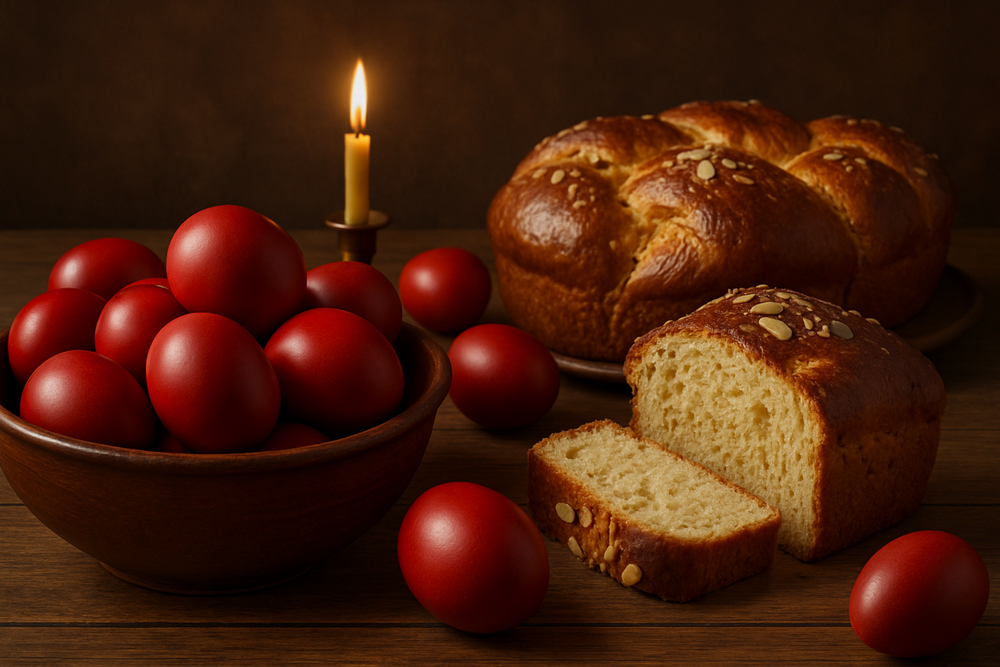
Perhaps the most beloved Easter tradition in Bulgaria is the dyeing of eggs, typically done on Holy Thursday or Saturday. The first egg is always dyed red, symbolizing the blood of Christ and meant to bring health and protection to the household. It is often kept unbroken until the next Easter.
Families then dye dozens of eggs in vibrant colors and intricate designs. But these eggs are not just for decoration—they’re used in a “egg fight” game, where each person selects an egg and taps it against someone else’s. The goal? To be the last one with an uncracked egg, believed to bring good luck for the year.
Kozunak: The Sweet Taste of Celebration
No Bulgarian Easter is complete without kozunak, a traditional sweet bread flavored with lemon zest, vanilla, and raisins, often braided and sometimes topped with almonds or sugar. Baking kozunak is a cherished ritual passed down from grandmothers to grandchildren, filling homes with the warm, comforting scent of holiday joy.
Preparing kozunak requires time, skill, and a bit of patience—it’s kneaded by hand and left to rise multiple times. But for many, the process is as meaningful as the final loaf, a symbol of family, tradition, and shared effort.
Local Touches: Songs, Fireworks, and Village Celebrations
While the core of Easter is spiritual, regional customs bring color and local identity to the holiday. In some villages, folk songs and dances are performed after the liturgy, as communities gather for open-air celebrations. In others, fireworks light up the night sky, blending the sacred with the spectacular.
In rural areas, Easter is also a time for visiting cemeteries, where families bring dyed eggs and bread to honor loved ones. It’s a quiet, moving gesture that connects the joy of resurrection with memory and respect.
More Than a Holiday
Bulgarian Easter is not just a day marked on the calendar. It is a living expression of faith, love, and shared heritage. From the glowing candle flames to the cracking of eggs, from whispered prayers to sweet bites of kozunak, it invites people to pause, reflect, and rejoice.
In every red egg, every rising loaf, and every heartfelt greeting lies the spirit of Bulgaria—resilient, joyful, and deeply rooted in tradition.